An early July walk over Foudland Hill brought together two of my favourite things: a good hill walk and the chance to see Scottish wildflowers in their natural habitat.
We set off via Red Hill, climbing towards the two prominent summit cairns. Even in July, the weather was characteristically Scottish: chilly, blustery and better suited to a jacket than a T-shirt.
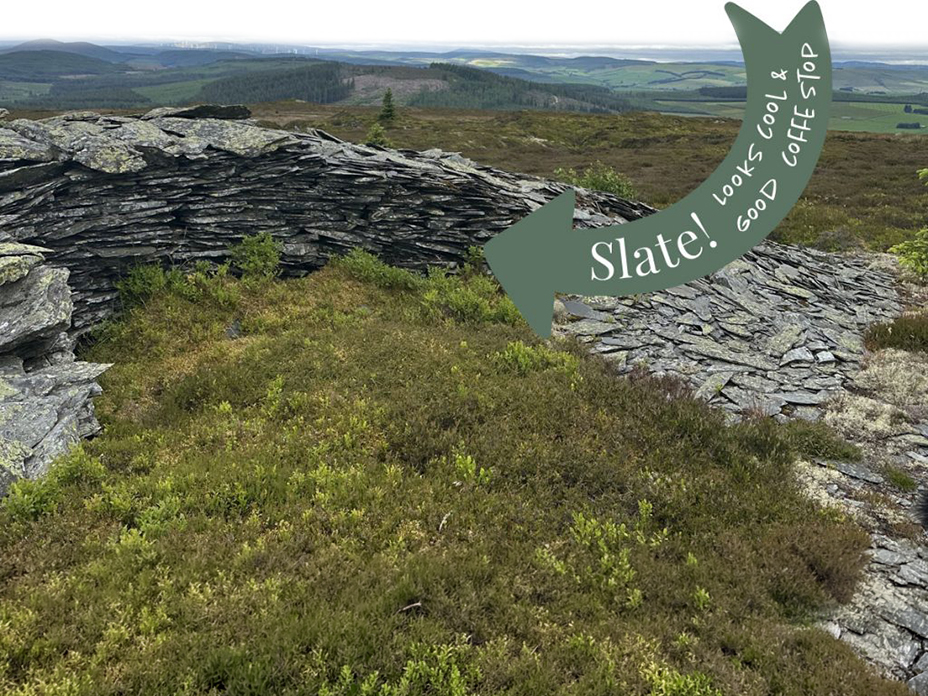
At 467 metres, Foudland Hill offers wide views across the Aberdeenshire landscape. Remnants of its past also dot the hill, including old slate quarry workings and stone foundations. On this particular day, they provided welcome shelter from the wind for a coffee stop.
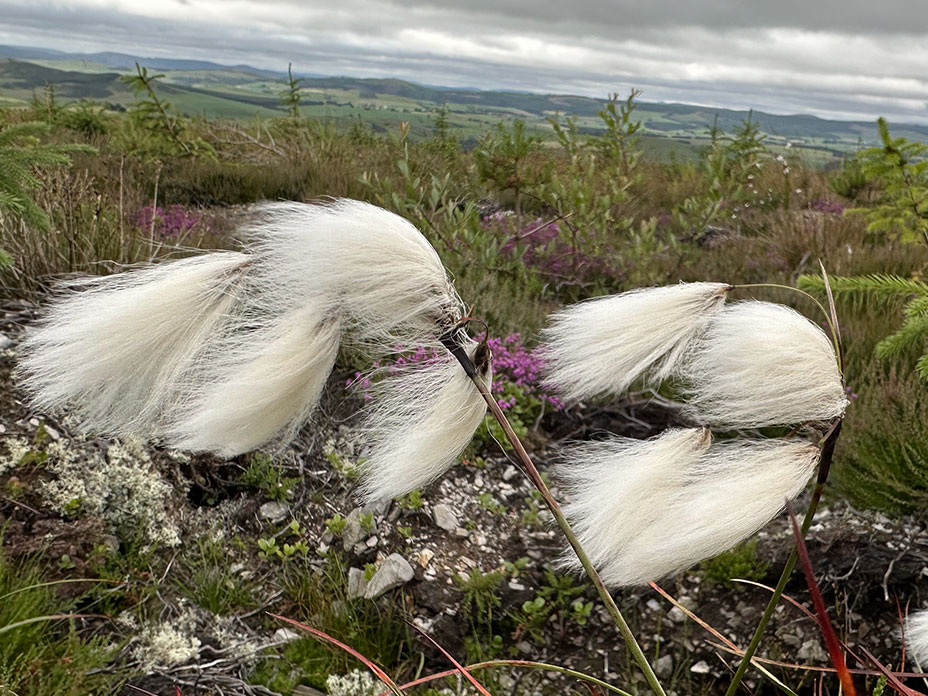
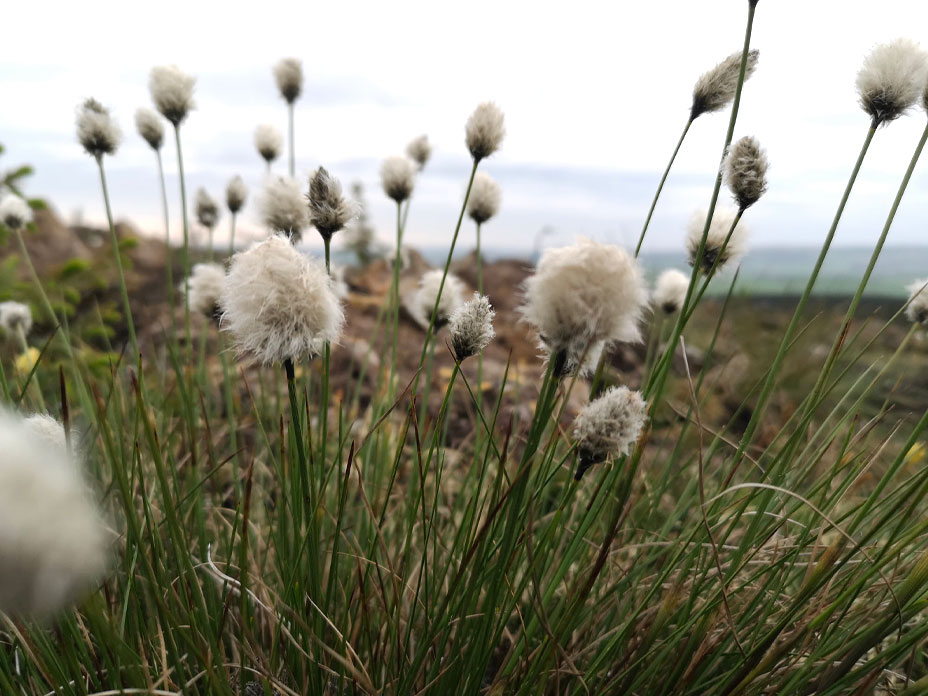
Cottongrass across the hill
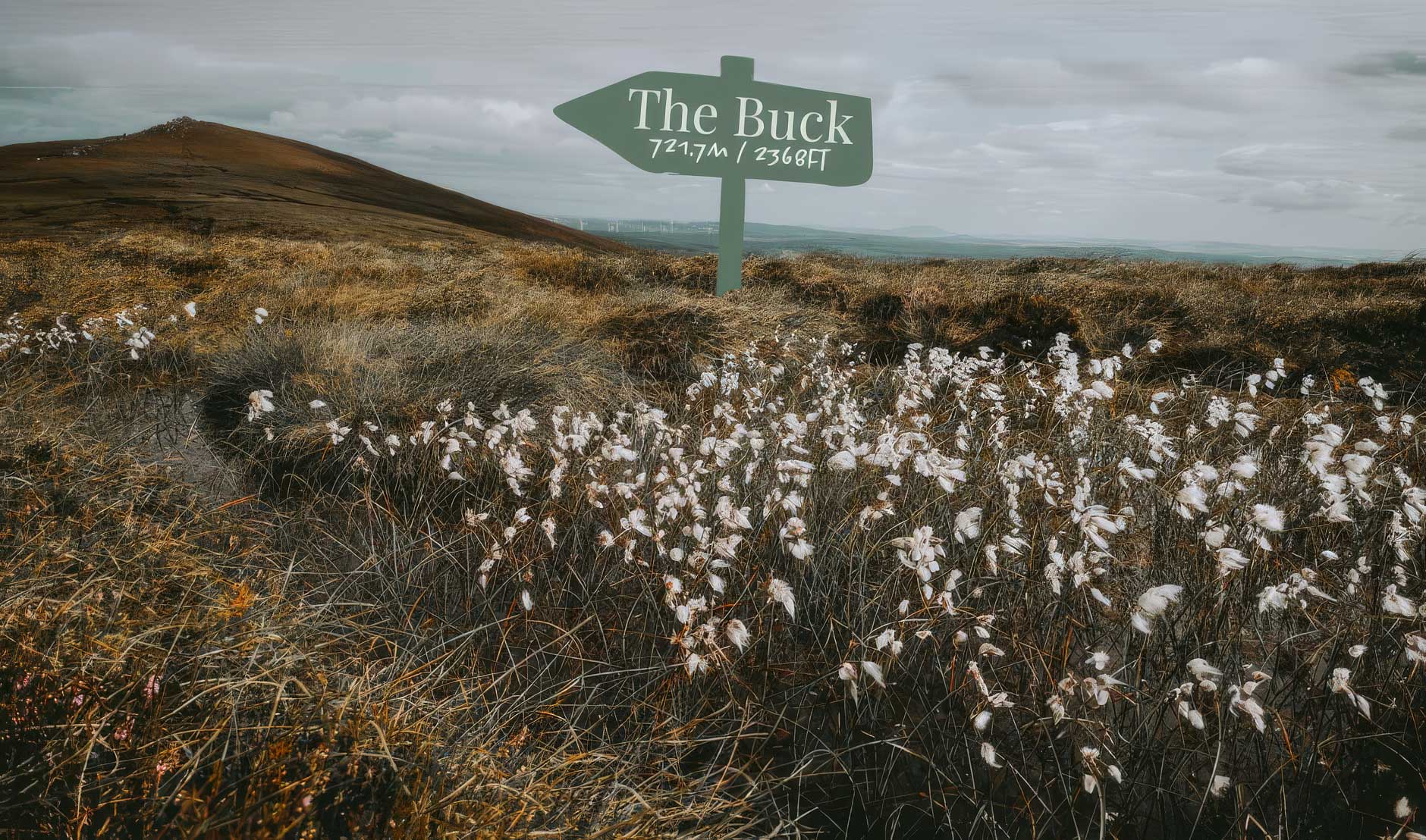
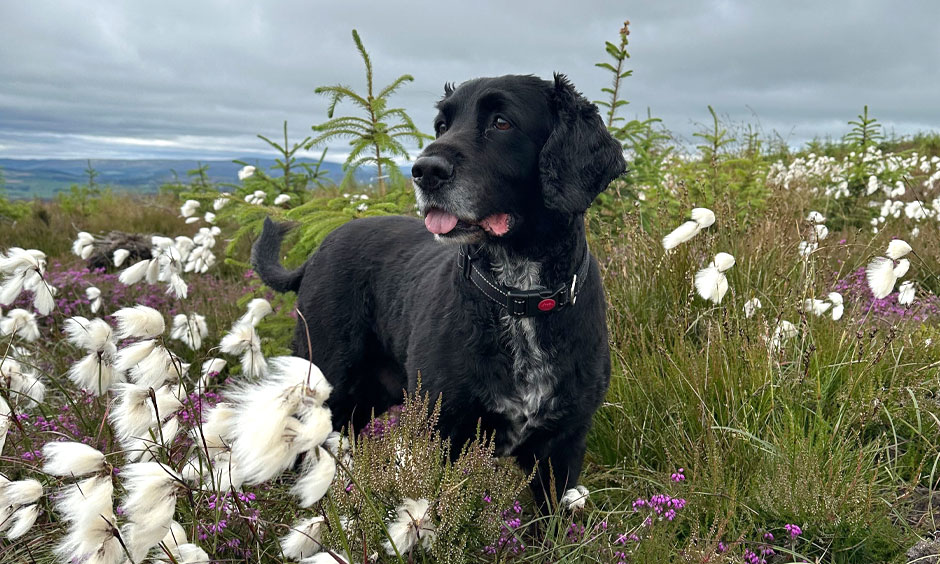
At this time of year, one of the most striking sights on Foudland Hill is the cottongrass. Its white, silky heads punctuate the moorland and move constantly in the wind, standing out beautifully against the greens, browns and purples of the surrounding vegetation.
Two species in particular caught my attention: hare’s-tail cottongrass (Eriophorum vaginatum) and common cottongrass (Eriophorum angustifolium).
Common cottongrass has a noticeably different form. Instead of a single head, several cottony heads sit on slender stalks at the top of the stem, creating a looser, more delicate silhouette. Seen growing across the hillside, the two species offered a wonderful chance to compare their forms in the landscape.
Hare’s-tail cottongrass is a plant I already knew particularly well. It was the subject of one of the final pieces I studied during my Diploma in Botanical Illustration at the Royal Botanic Garden Edinburgh. Its distinctive white head comes from a single spikelet, giving it a compact, almost hare’s-tail appearance.
Wildflowers along the way
The cottongrass may have dominated the hillside, but it was far from the only botanical interest.

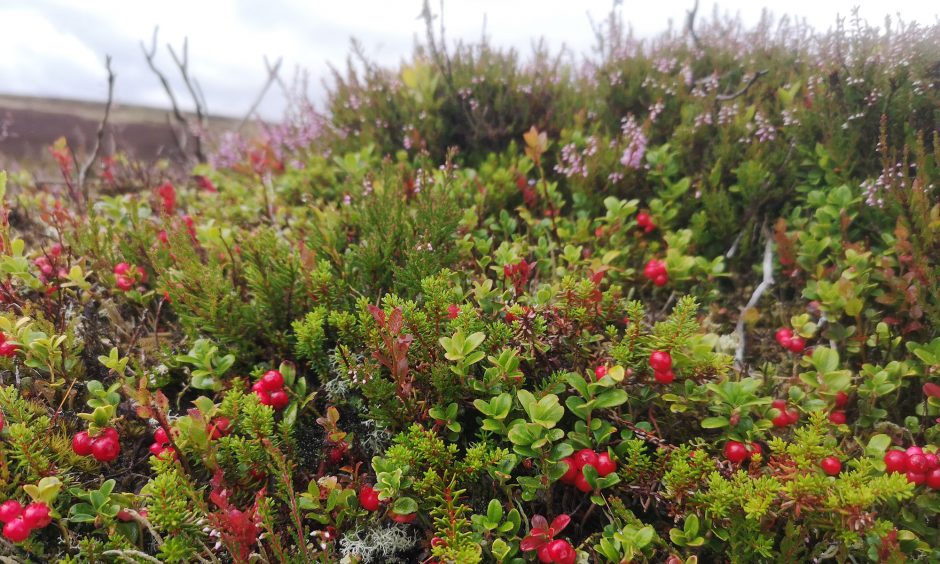
I’m always on the lookout for wildflowers when I’m walking, and there was plenty to spot here. It’s one of the things I love about walking in the hills, there’s nearly always something interesting growing if you take the time to look.
Among the plants we encountered were:
- Bell heather (Erica cinerea)
- Cowberry (Vaccinium vitis-idaea)
- Blaeberry (Vaccinium myrtillus)
- Spotted-orchids (Dactylorhiza sp.)
- Foxglove (Digitalis purpurea)
Walks like this are an important part of my botanical work. Seeing plants growing naturally gives me something that photographs or specimens alone cannot: a sense of their habitat, scale, movement and relationship with the landscape around them.
Foudland Hill was particularly memorable for the sheer abundance of cottongrass. Watching those white heads moving across the hillside in the July wind was a reminder of just how much there is to notice in even a familiar Scottish landscape.
You can see my hare’s-tail cottongrass botanical painting in the portfolio, or read more in Exploring the World of Cottongrass, where I take a closer look at these fascinating plants.