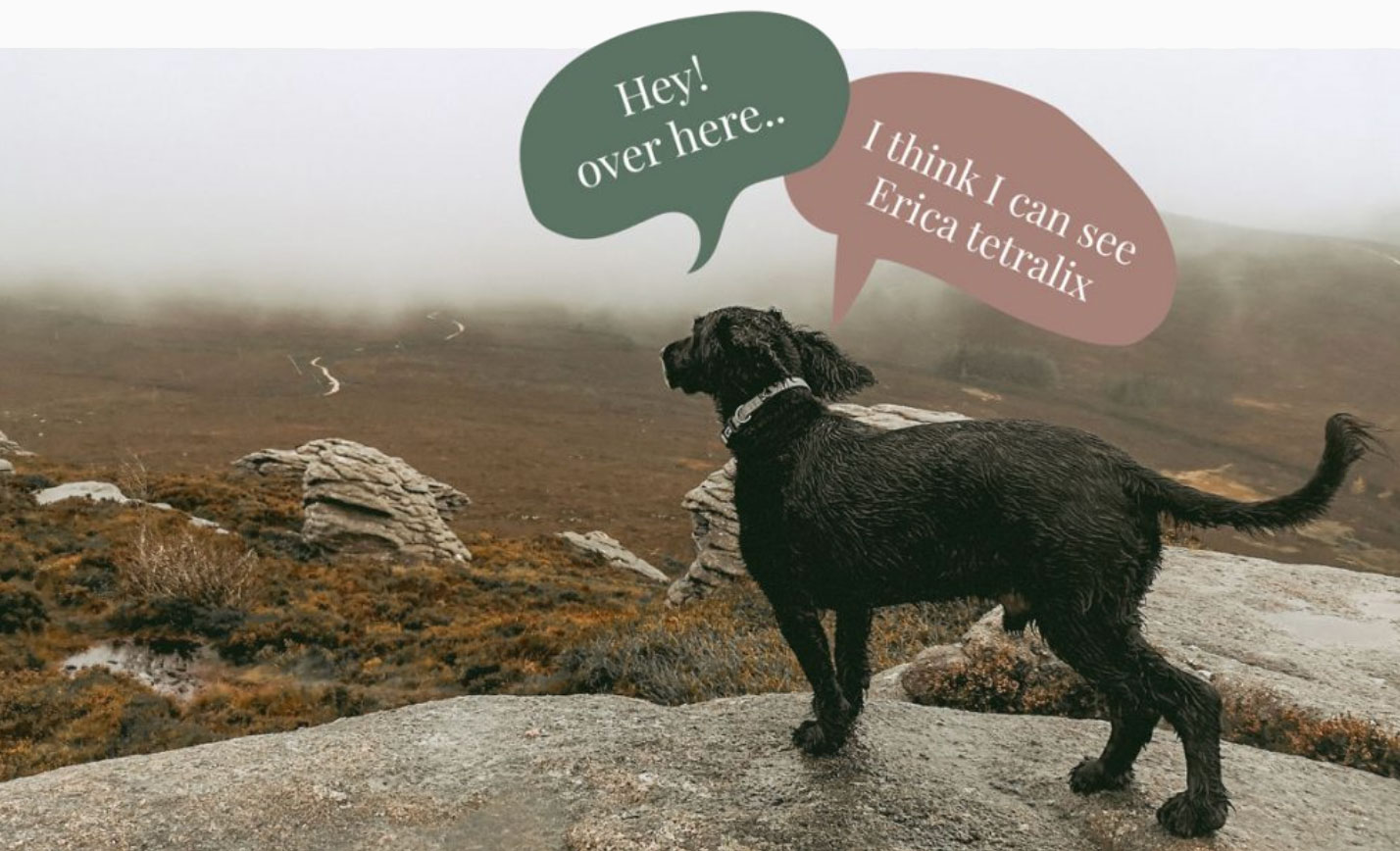
Today I headed up Bennachie in search of a plant that had been proving surprisingly difficult to find: cross-leaved heath (Erica tetralix).
The weather wasn’t exactly on our side. It was foggy, damp and thoroughly dreich, but there’s something I really enjoy about Bennachie in these conditions. The mist changes the landscape completely, and somehow a grey day makes the colours of the plants stand out even more.
Finding Cross-leaved Heath
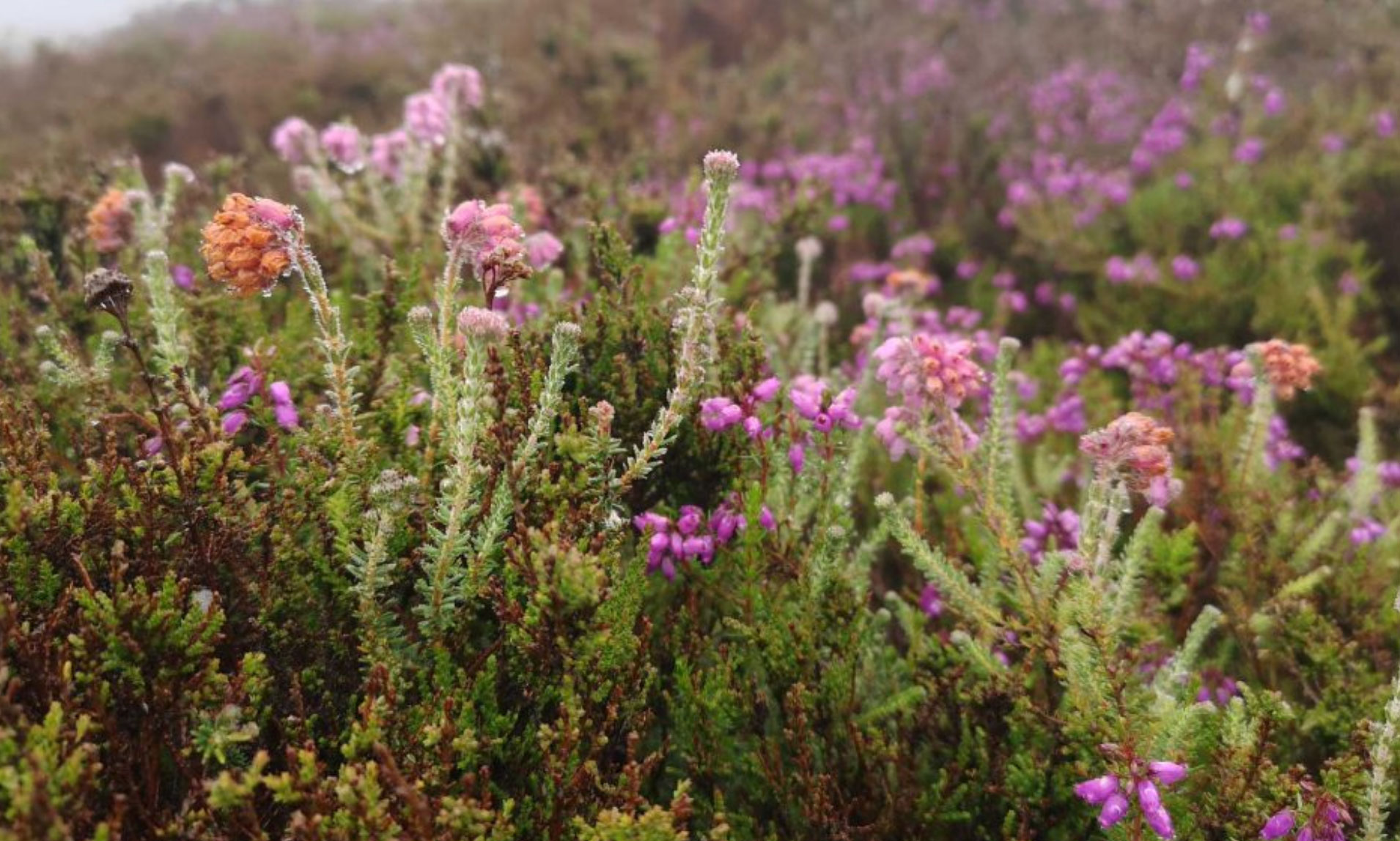
Until now, finding cross-leaved heath amongst the masses of other heathers had seemed a bit like looking for a needle in a haystack. This time, thankfully, it was flowering.
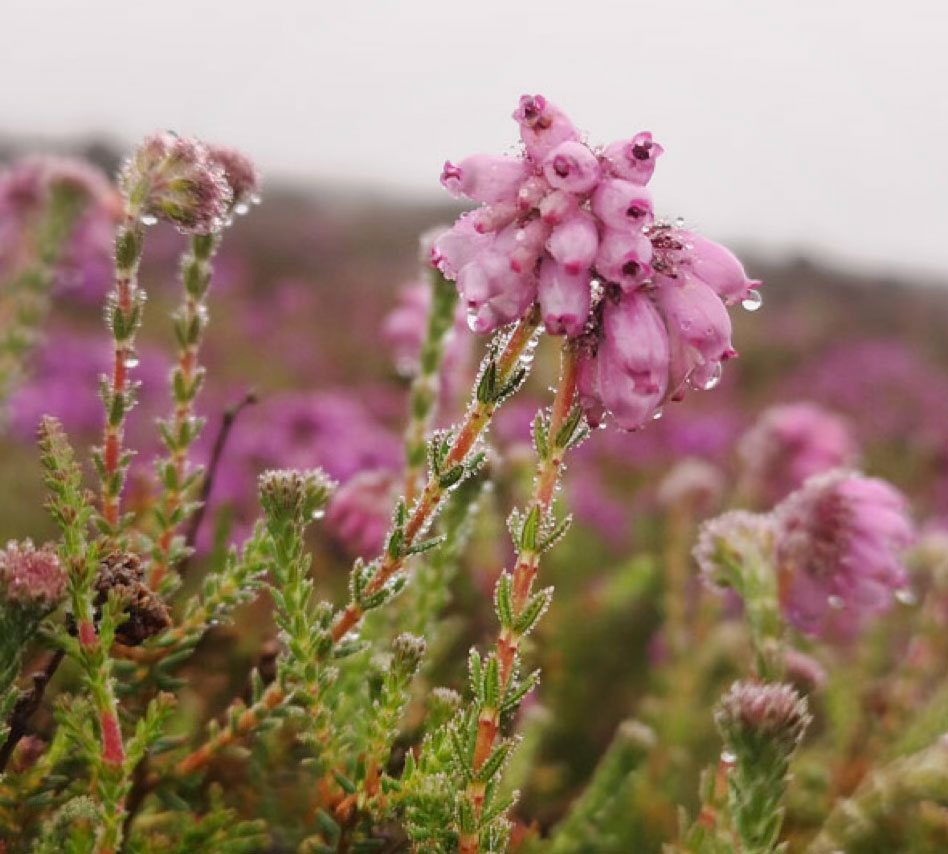
Its larger pink flowers stood out against the smaller, deeper purple flowers of bell heather, making it much easier to spot among the surrounding vegetation. What actually caught our attention first, though, were some of the older flowers. As they faded, they had taken on a wonderful peachy colour that really stood out against the heathland.
Cross-leaved heath was one of five plants I’d selected for my final botanical illustration project, so finding it growing naturally on Bennachie gave me the opportunity to look much more closely at the plant and its habitat.
A closer look
Cross-leaved heath (Erica tetralix) belongs to the heather family, Ericaceae. Its narrow leaves are arranged in distinctive whorls of four around the stem, which is where its common name comes from. It favours wet, acidic habitats such as bogs and wet heath, making the damper areas of Bennachie a good place to look for it. Once I’d finally found it, I took plenty of reference photos and carefully collected a few specimens to take back to the studio.
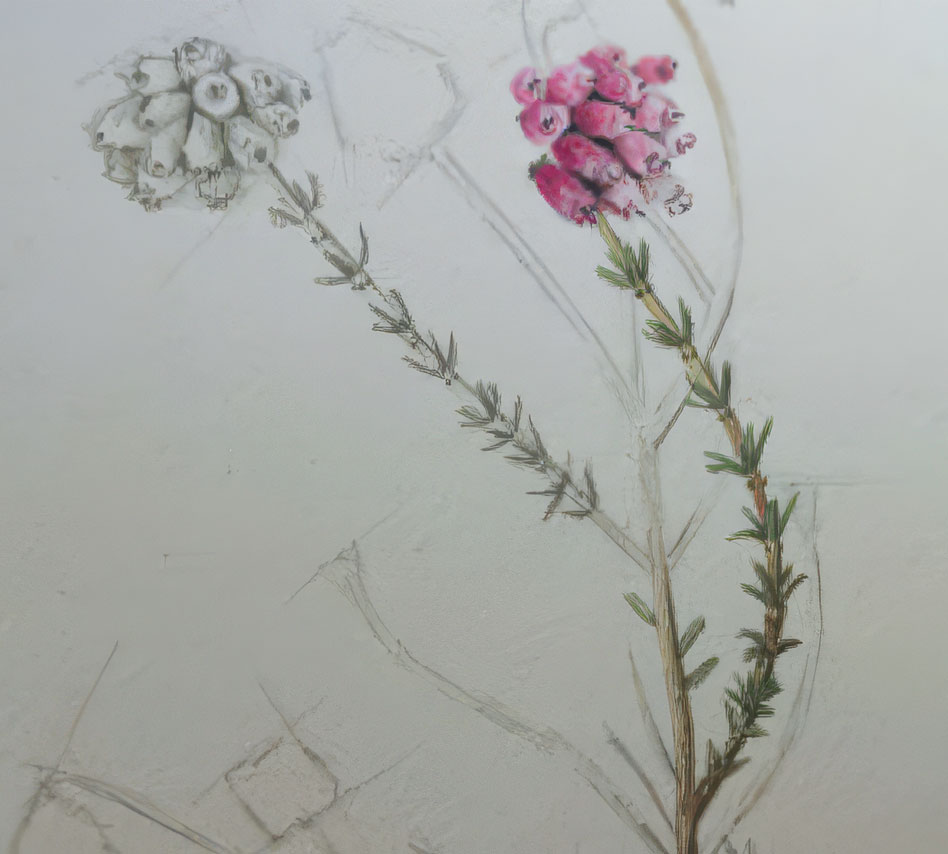
The next stage was to look at the plant in much more detail.
I could begin colour matching while the specimens were still fresh, take measurements and create the measured drawings that would eventually help me plan the final botanical painting.
This is one reason I enjoy combining hill walking with botanical illustration. Finding a plant growing in its natural habitat gives me the chance to see much more than I would from a photograph alone, from its size and growth habit to the subtle changes in colour as its flowers age.
And after spending so long looking for cross-leaved heath, I suspect I’ll see it everywhere now!
You can see the finished cross-leaved heath botanical painting in my portfolio, developed from the specimens, photographs and measured drawings gathered during this fieldwork.